
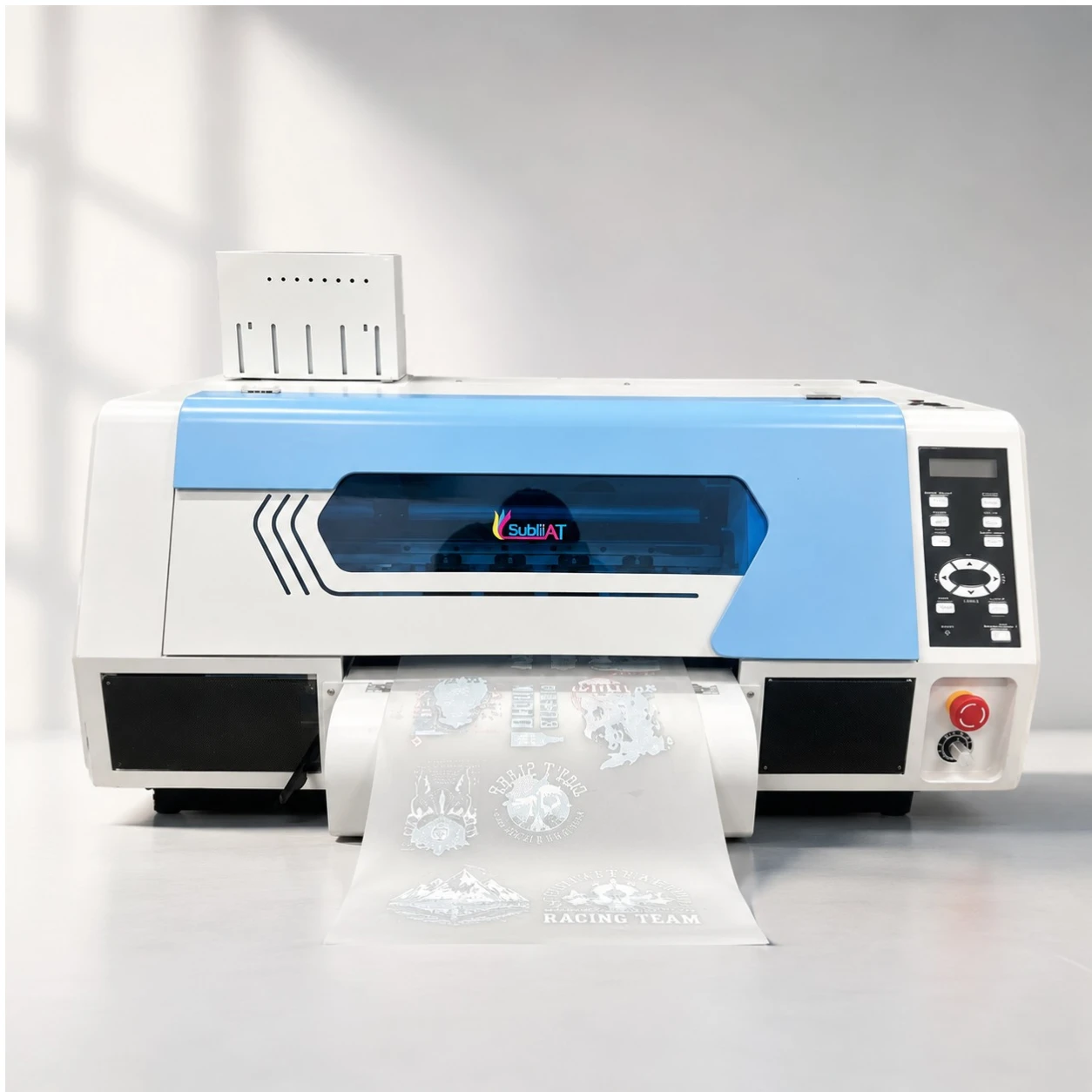
Both DTF (Direct-to-Film) and sublimation printing are hugely popular in the custom apparel and gifting space right now, and beginners often ask which one they should learn first. The honest answer is: it depends on what fabric and colours you're working with.
Sublimation works by turning ink into a gas that permanently bonds with polyester fibres or a polyester coating. This is why sublimation is the go-to method for mugs, sipper bottles, MDF photo panels, mousepads and light-coloured polyester t-shirts — the print becomes part of the material itself, so it never cracks, peels or fades from washing. The limitation is that it only works well on white or light polyester surfaces.
DTF prints a full-colour design (including white ink) onto a special film, which is then heat-pressed onto almost any fabric — cotton, blends, dark colours, even nylon in some cases. This flexibility is why DTF has exploded in popularity for t-shirt businesses that want to print on-demand for any garment colour without holding polyester-only stock.
In terms of investment, sublimation printers and blanks tend to have a lower entry cost, while DTF setups (printer, powder shaker, film and curing) cost more upfront but open the door to a much wider range of finished products.
Many of our customers eventually run both: sublimation for mugs, bottles and photo gifts, and DTF for dark or cotton apparel. If you're only picking one to start, ask yourself what your very first ten customers are likely to order — that answer usually makes the decision for you.
